

Explain the parts of the drawing
Name the main shapes and intended objects so ambiguous lines have a clear meaning.
Prompt Guide
Model
Reference Image
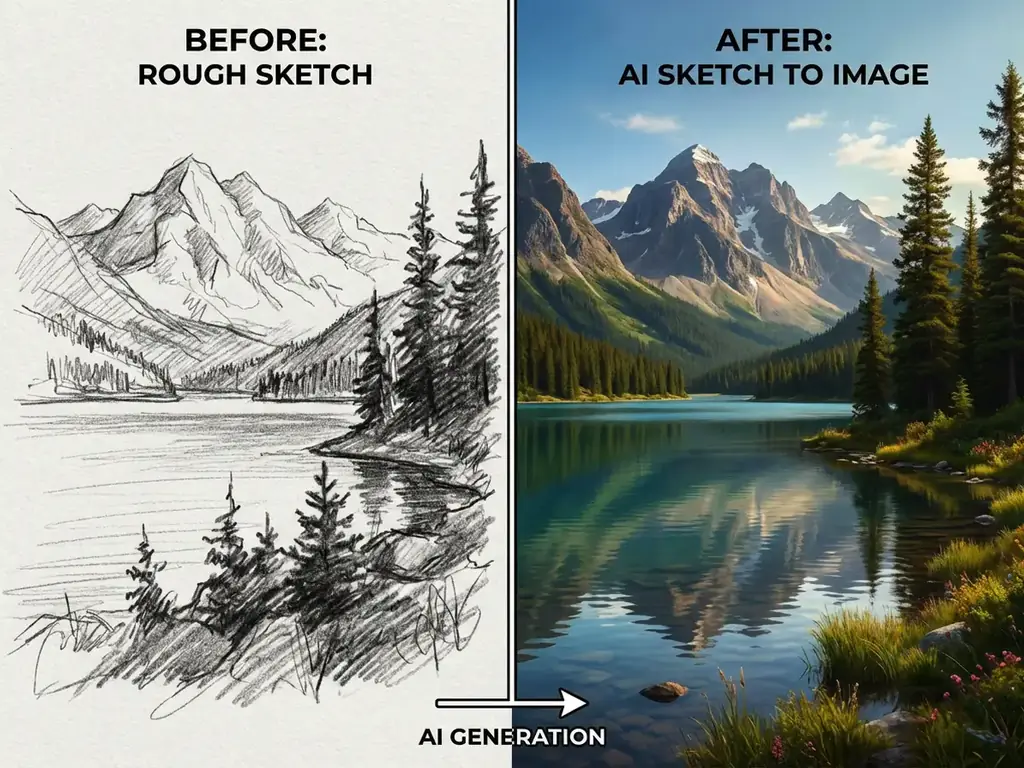
Use your sketch as a starting point for a more developed image. Describe the subject, materials, lighting and details you want to add, then compare the result with your drawing to keep the important shapes on track.
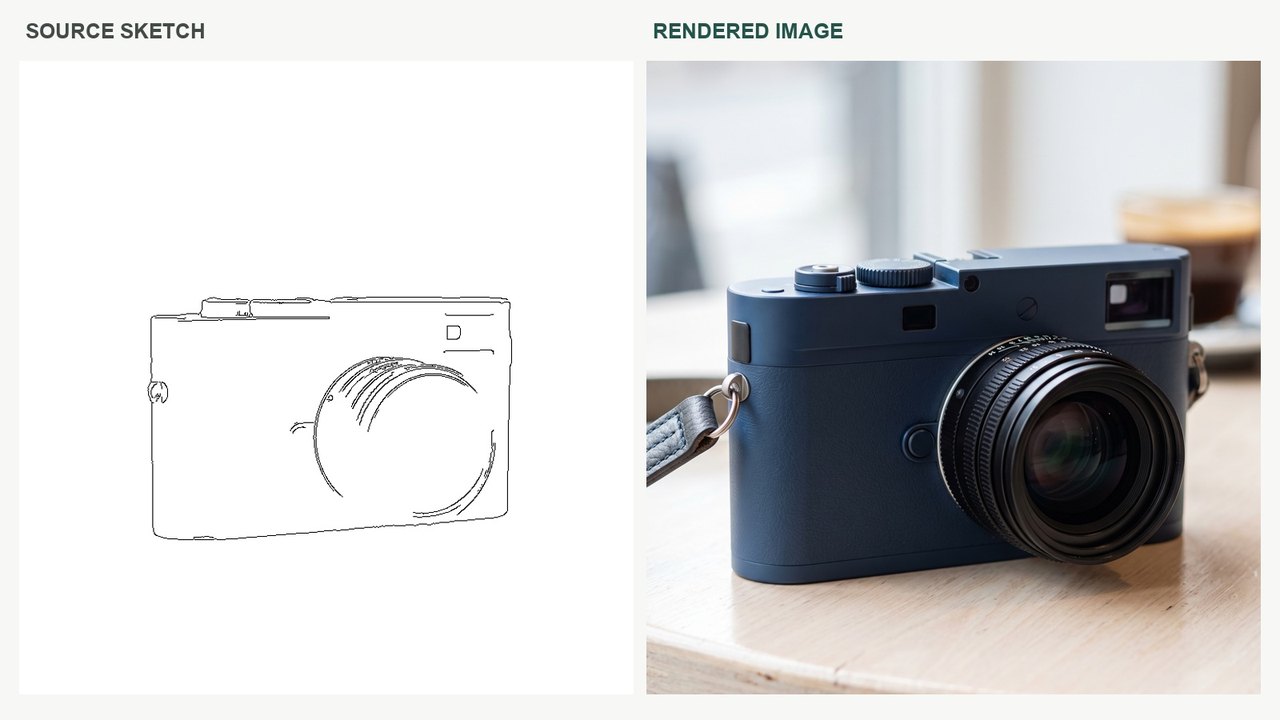
Sketches paired with reference-guided renders, alongside selected original concepts. The main outline and camera view should remain recognizable.
 Products
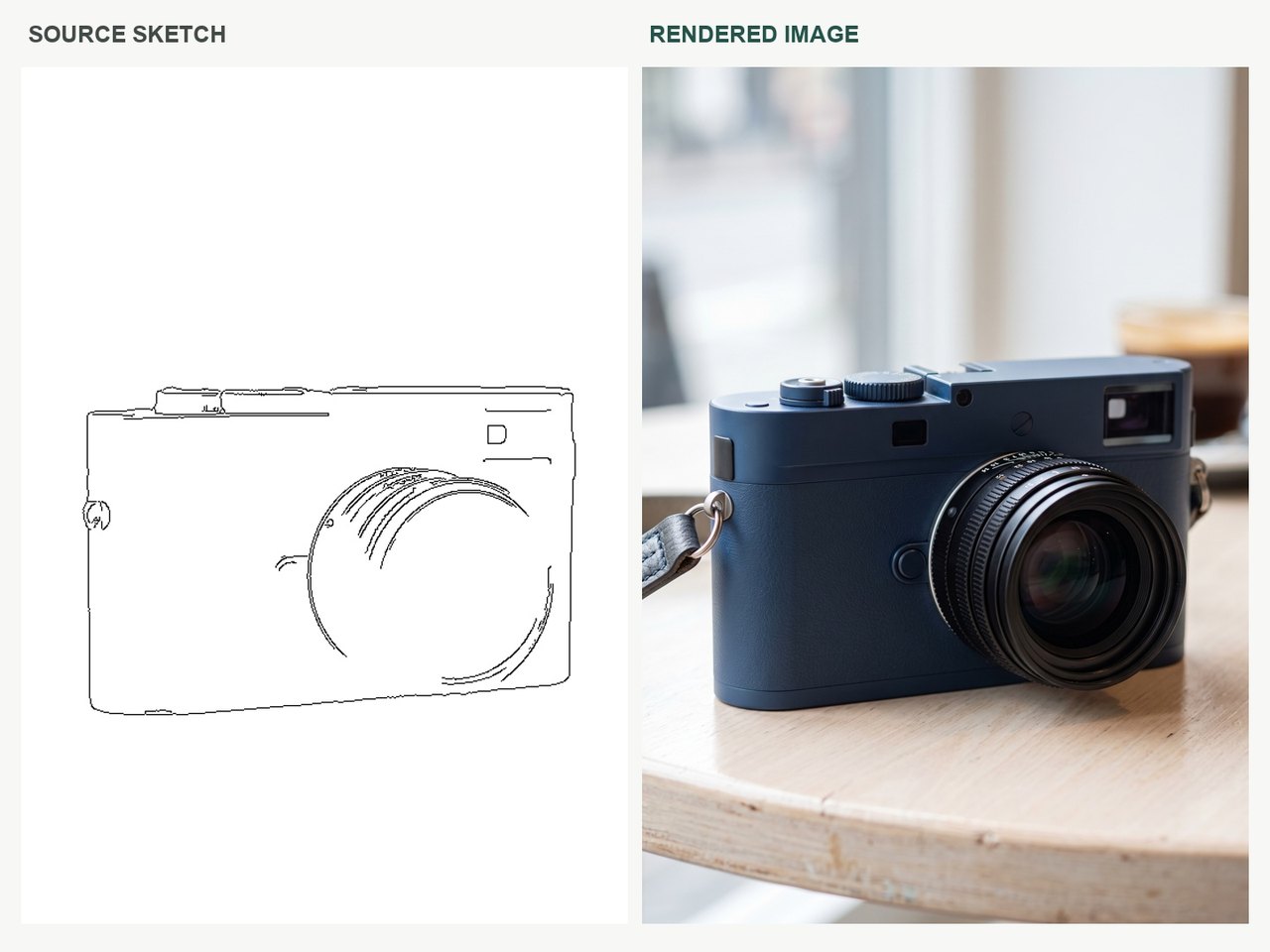
Use the attached black-and-white sketch as the exact structure reference. Render it as a beautiful realistic matte navy analog-style camera with a black lens on a pale cafe table. Keep the exact main outlines, proportions, pose and viewing angle from the sketch; do not invent a different subject. Soft bright natural daylight, lifelike material detail, coherent anatomy and geometry. One finished image only, no text, labels, logos or comparison panels.
Use a Related Prompt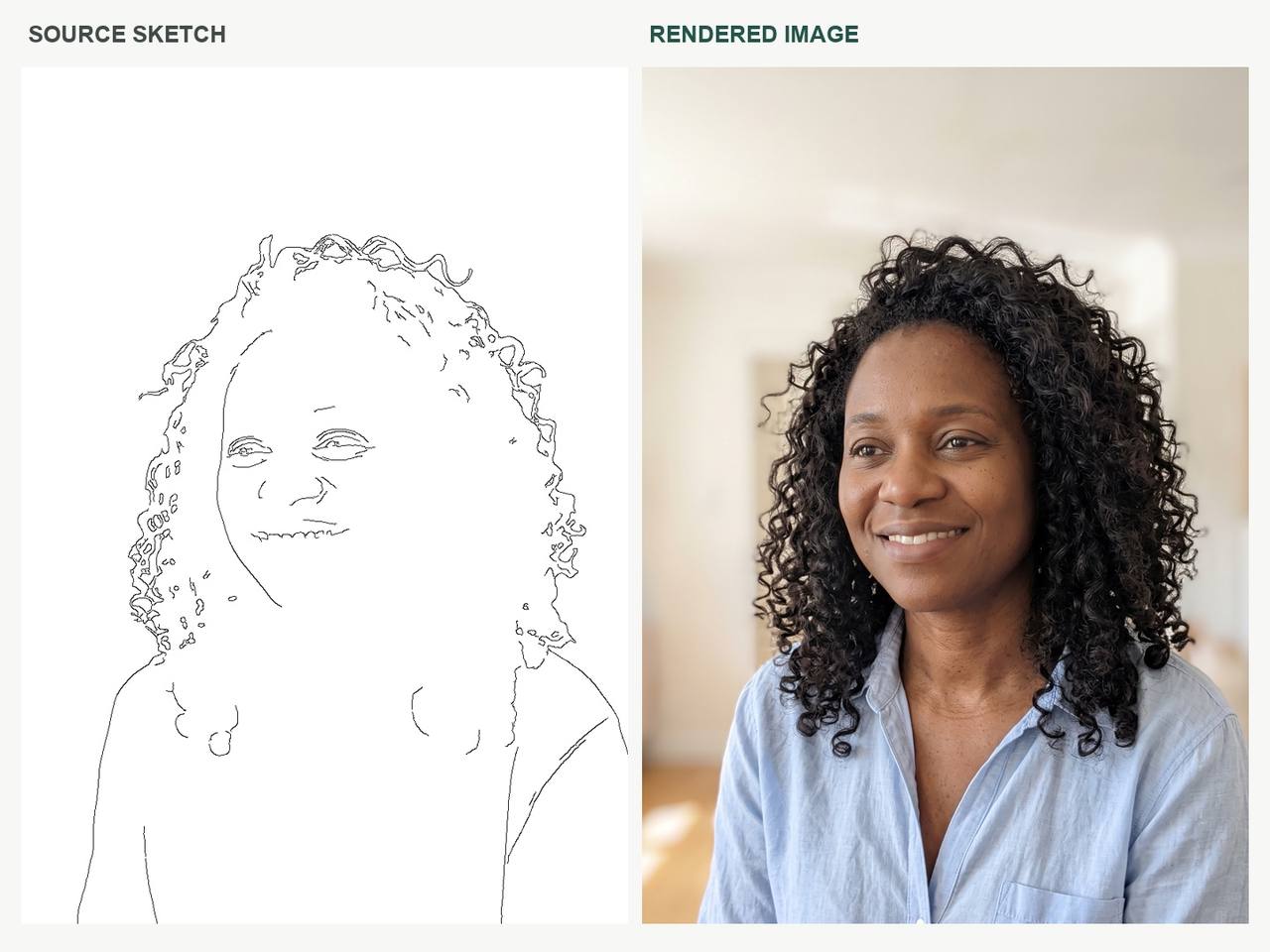 Portraits
Use the attached black-and-white sketch as the exact structure reference. Render it as a beautiful realistic portrait of a fictional adult Black woman with naturally curly dark hair wearing a pale blue cotton shirt. Keep the exact main outlines, proportions, pose and viewing angle from the sketch; do not invent a different subject. Soft bright natural daylight, lifelike material detail, coherent anatomy and geometry. One finished image only, no text, labels, logos or comparison panels.
Use a Related Prompt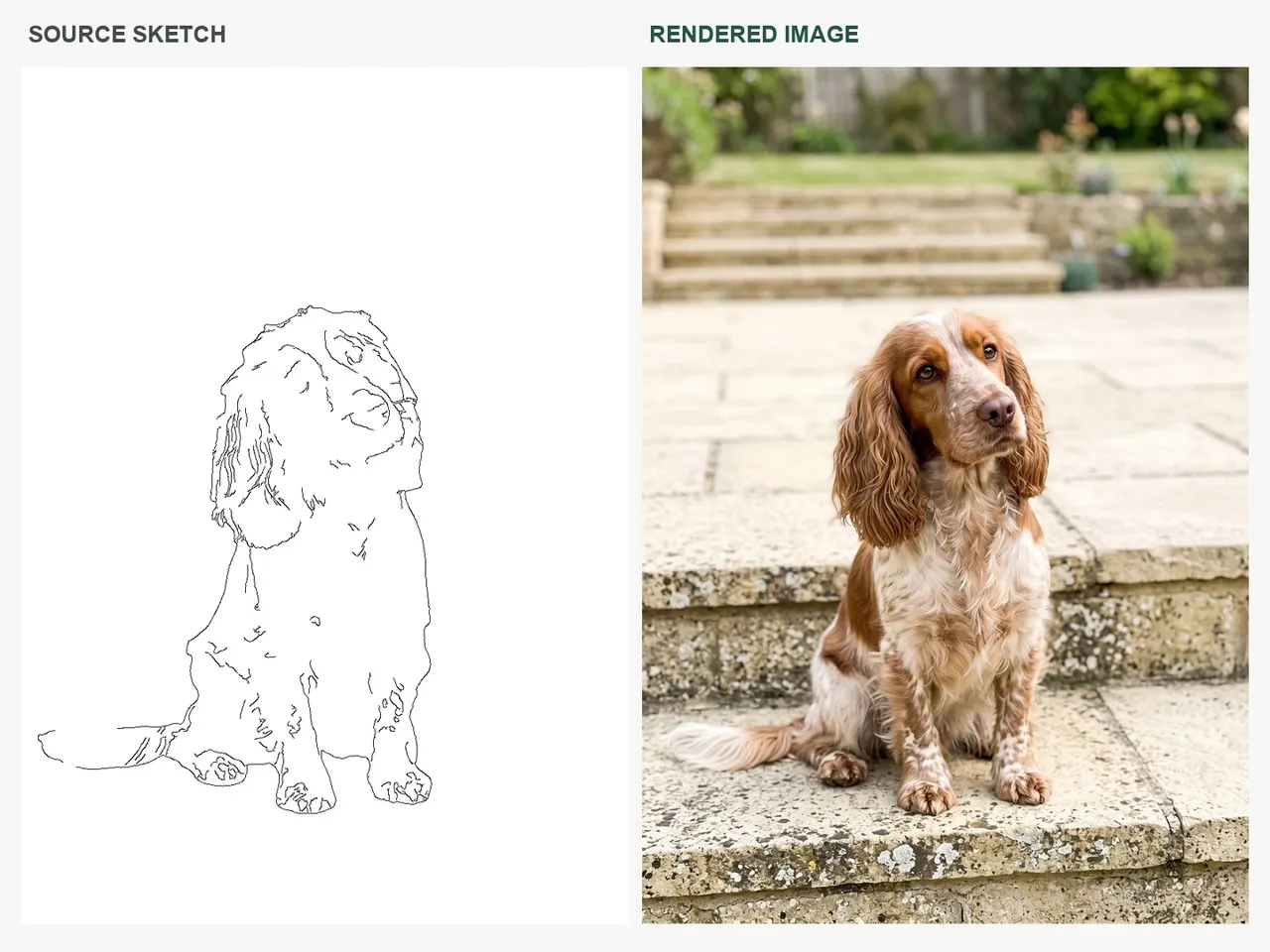 Animals
Use the attached black-and-white sketch as the exact structure reference. Render it as a beautiful realistic brown and white cocker spaniel sitting on pale garden stone steps. Keep the exact main outlines, proportions, pose and viewing angle from the sketch; do not invent a different subject. Soft bright natural daylight, lifelike material detail, coherent anatomy and geometry. One finished image only, no text, labels, logos or comparison panels.
Use a Related Prompt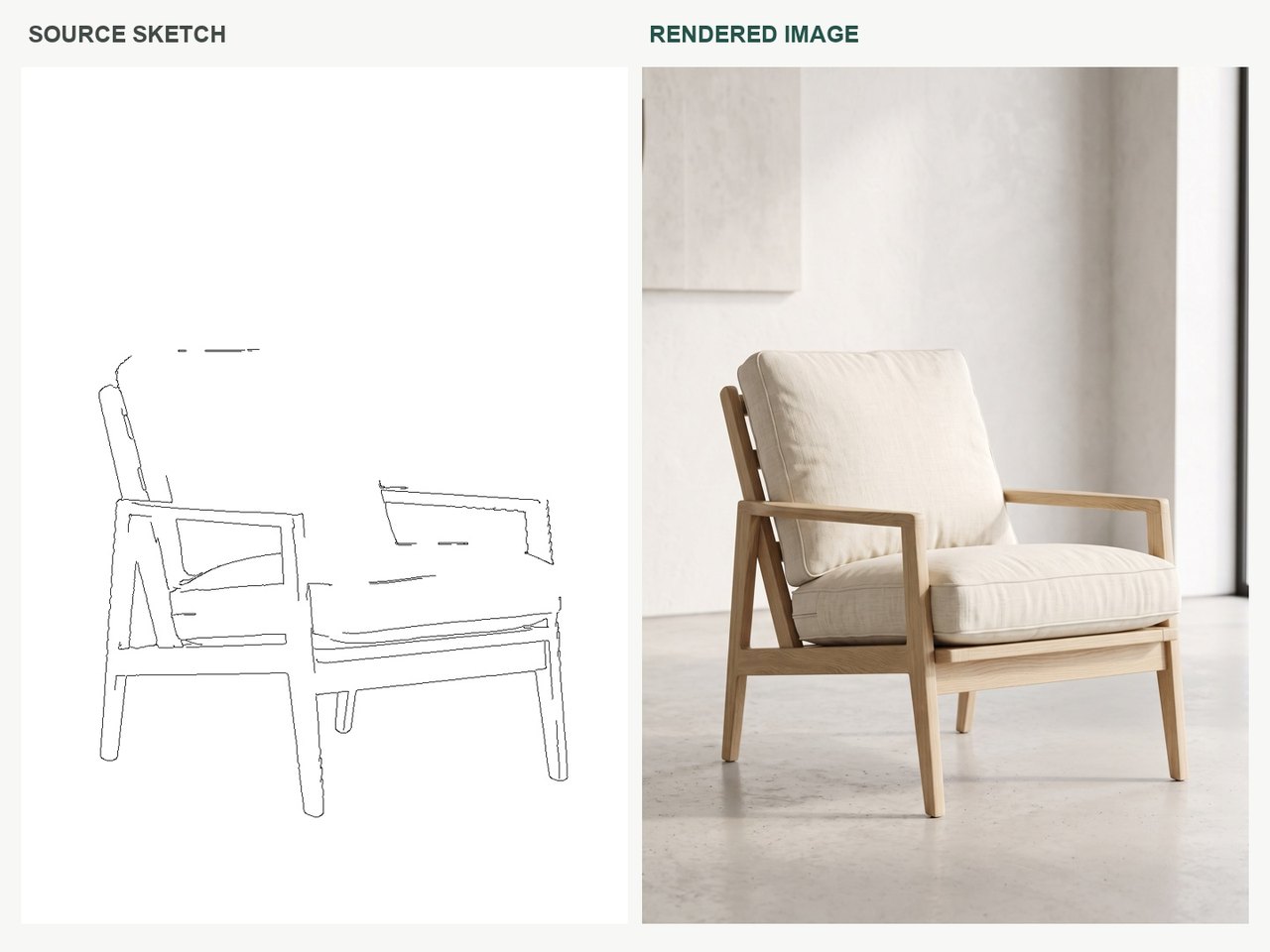 Furniture
Use the attached black-and-white sketch as the exact structure reference. Render it as a beautiful realistic pale oak lounge chair with cream linen cushions in a bright modern studio. Keep the exact main outlines, proportions, pose and viewing angle from the sketch; do not invent a different subject. Soft bright natural daylight, lifelike material detail, coherent anatomy and geometry. One finished image only, no text, labels, logos or comparison panels.
Use a Related Prompt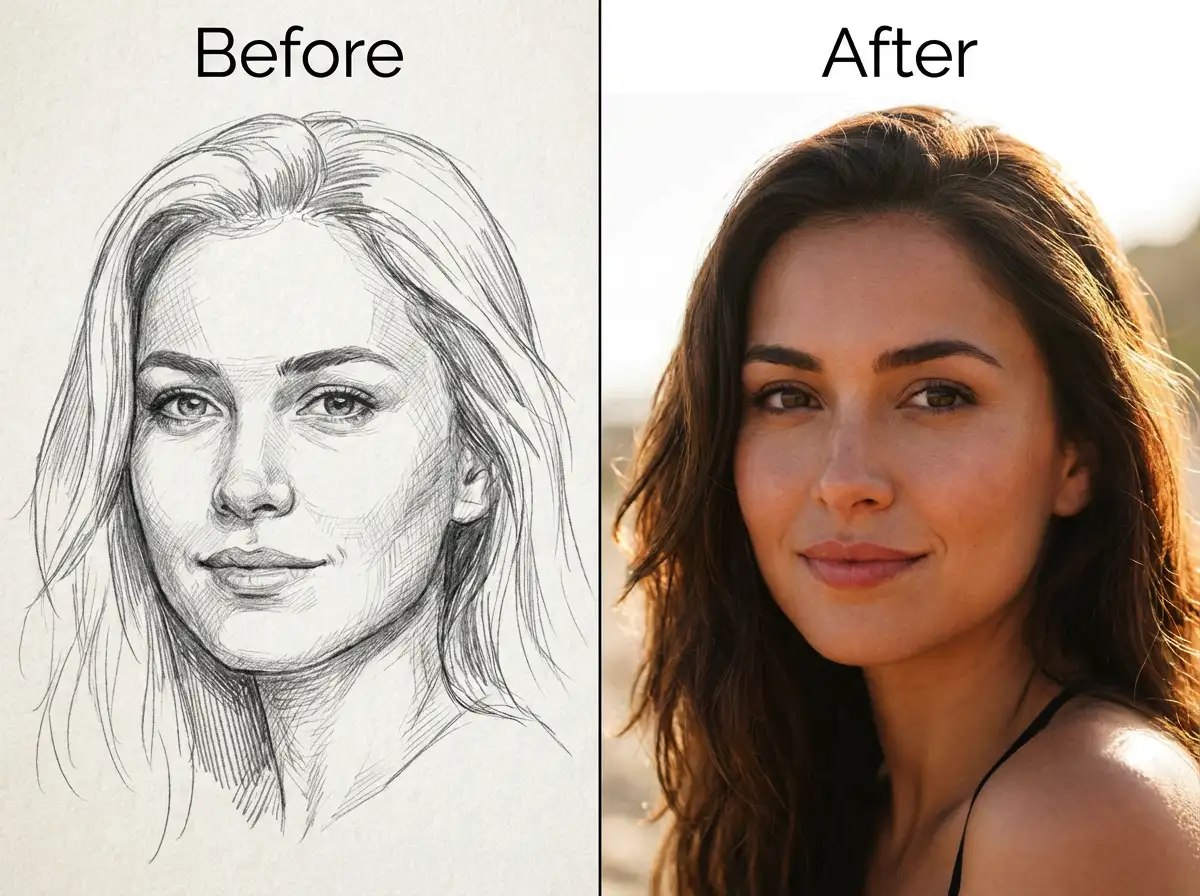 Portraits
Create an image inspired by portrait sketch to image. Preserve the intended subject and style, with coherent proportions and a clean composition. Use the attached reference when provided.
Use a Related Prompt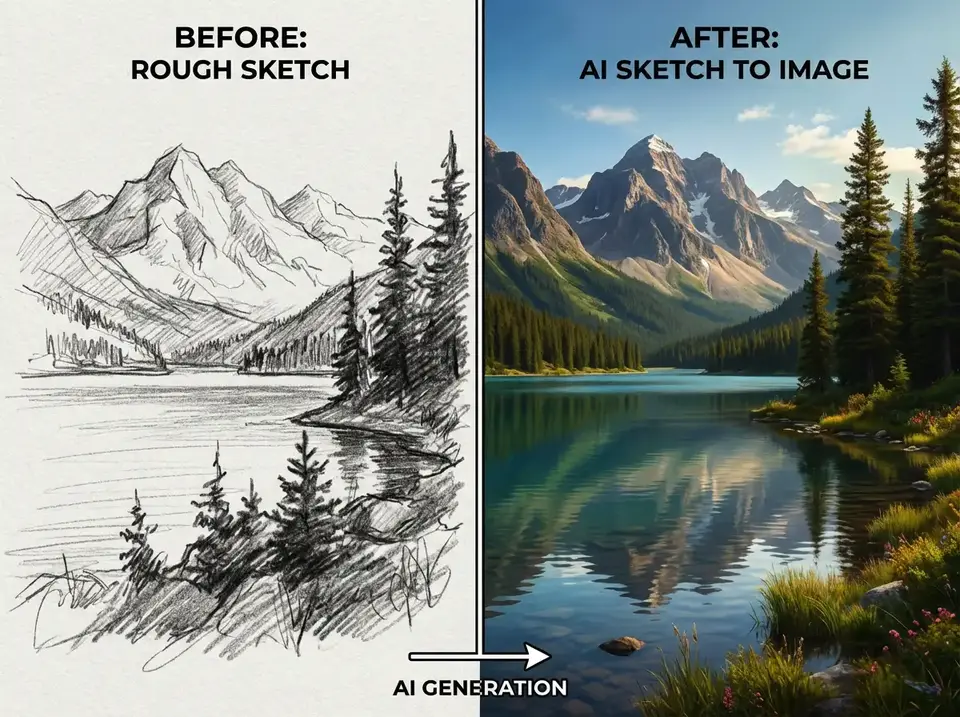 Landscapes
Create an image inspired by landscape drawing to scene. Preserve the intended subject and style, with coherent proportions and a clean composition. Use the attached reference when provided.
Use a Related Prompt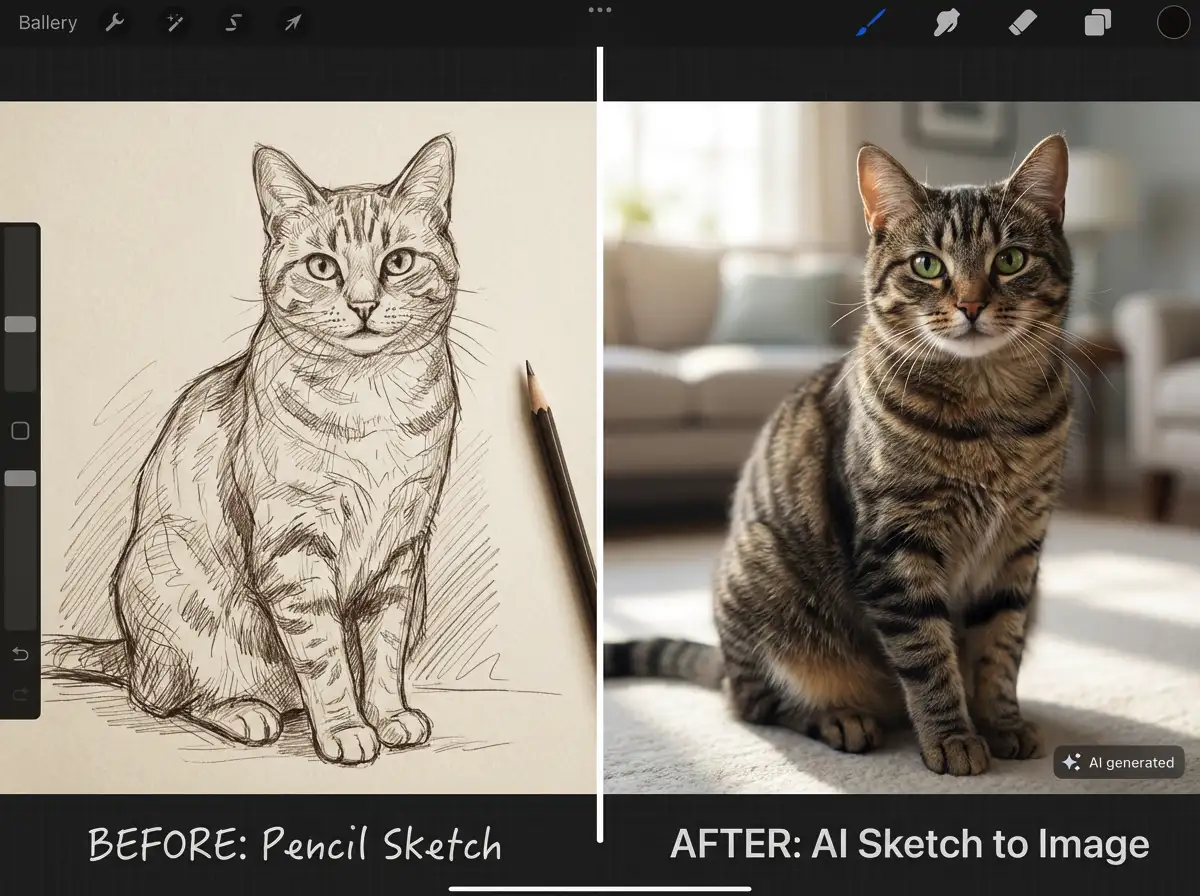 Animals
Create an image inspired by cat drawing to pet portrait. Preserve the intended subject and style, with coherent proportions and a clean composition. Use the attached reference when provided.
Use a Related Prompt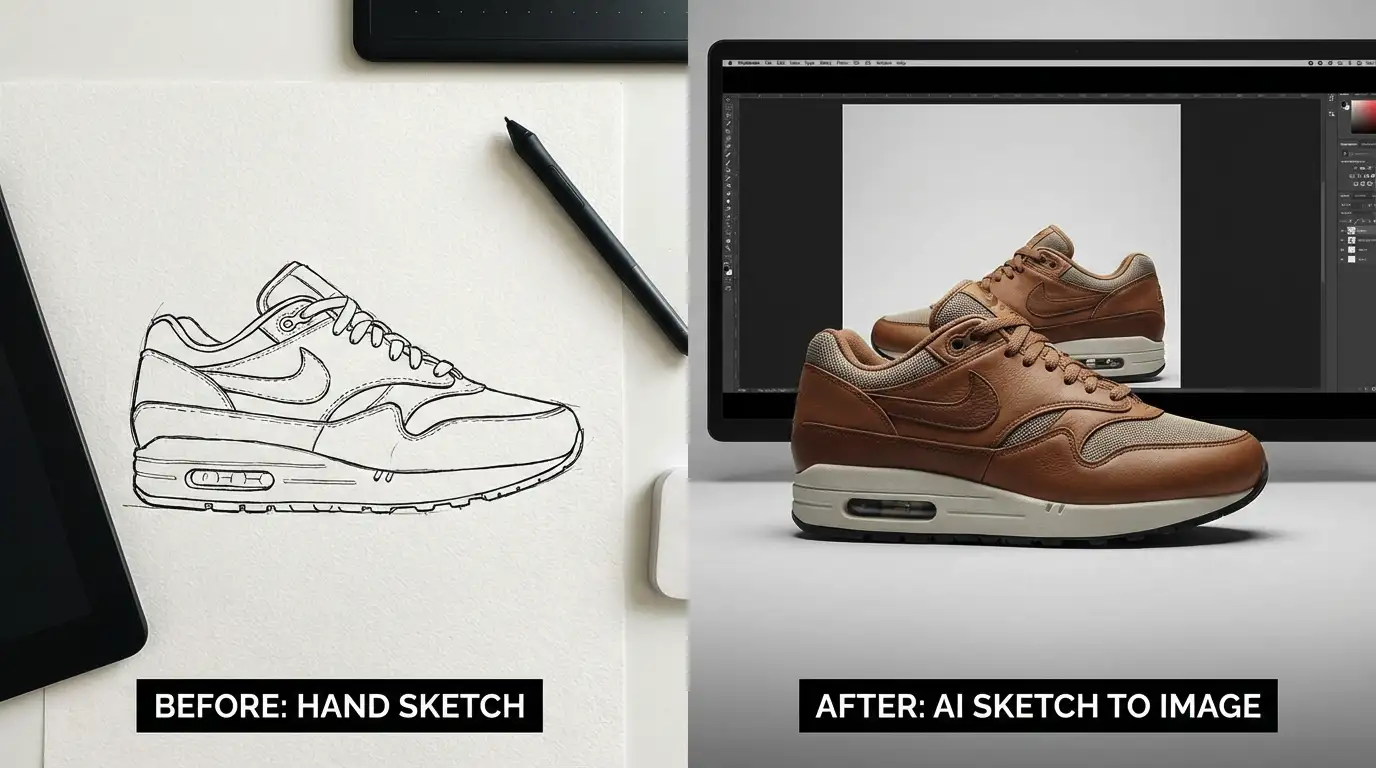 Products
Create an image inspired by shoe concept to product. Preserve the intended subject and style, with coherent proportions and a clean composition. Use the attached reference when provided.
Use a Related Prompt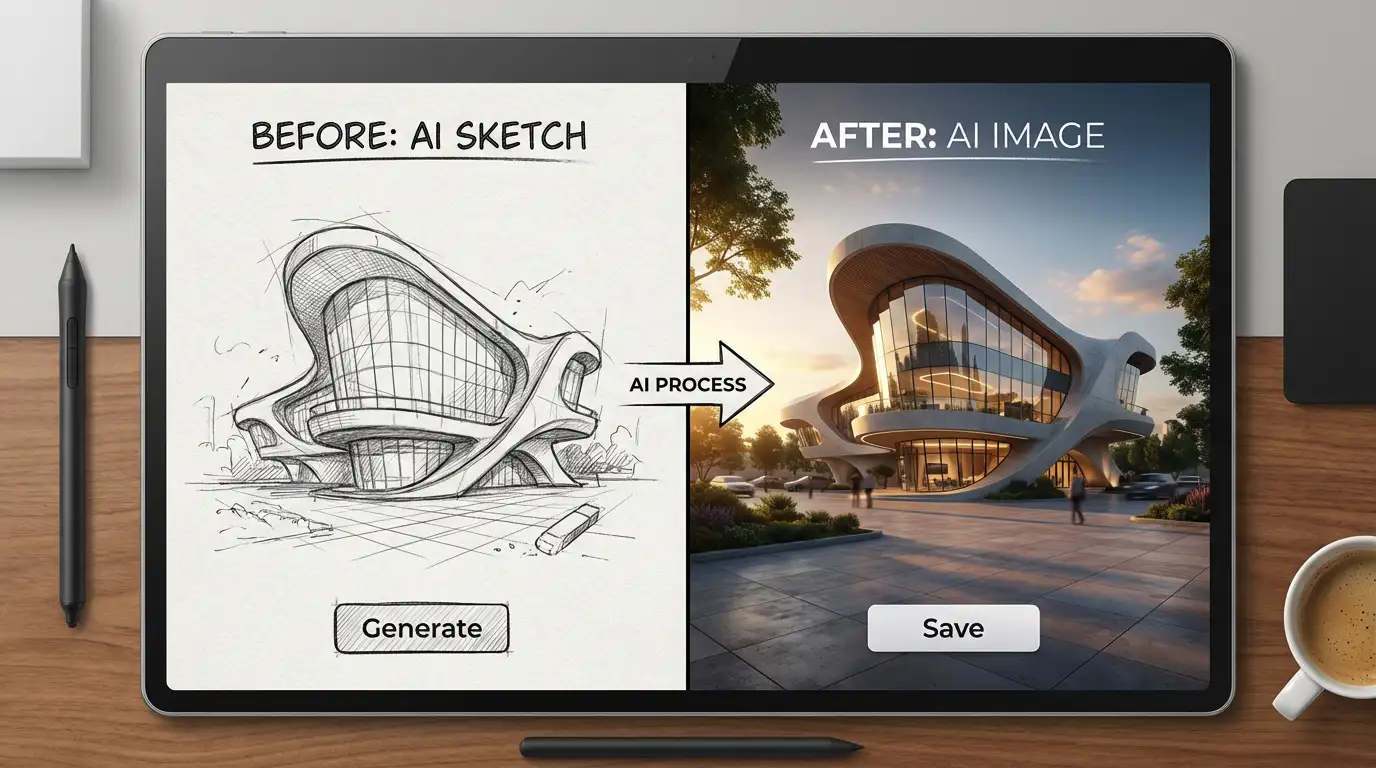 Architecture
Create an image inspired by architecture drawing to concept. Preserve the intended subject and style, with coherent proportions and a clean composition. Use the attached reference when provided.
Use a Related Prompt Architecture
Create an image inspired by futuristic city sketch. Preserve the intended subject and style, with coherent proportions and a clean composition. Use the attached reference when provided.
Use This DirectionName the main shapes and intended objects so ambiguous lines have a clear meaning.
Specify fabric, wood, metal, glass or landscape textures instead of asking only for a realistic result.
Compare silhouette, perspective and proportions with the source sketch before developing the concept further.
A focused brief makes each result easier to judge.
Use your drawing with a reference-capable model. Name the main shapes and objects, and identify the silhouette or layout that should stay.
Choose an available model and aspect ratio. Keep the brief focused on the requested change, with clear style and lighting instructions.
Compare proportions, perspective and major lines. Refine one material or shape at a time before using the concept for further design work.
Fictional scenarios for review, not real customer testimonials or ratings.
Illustrative scenario: Portrait sketch render. Name the main shapes and intended objects so ambiguous lines have a clear meaning.
Illustrative scenario: Landscape sketch render. Specify fabric, wood, metal, glass or landscape textures instead of asking only for a realistic result.
Illustrative scenario: Product sketch render. Compare silhouette, perspective and proportions with the source sketch before developing the concept further.
Use a clear photo or scan with the subject separated from the background. Label important parts in your prompt rather than relying on ambiguous lines.
Not necessarily. The model can reinterpret the sketch, so compare composition, proportions and key design features after generation.
Describe the intended rendering style along with materials and lighting. The available model may interpret the style differently.
Treat it as a visual concept. It does not replace architectural drawings, structural checks or professional design documentation.
Clarify one mismatch at a time: silhouette, material, perspective or background. Keep the original sketch and the target brief consistent while testing changes.